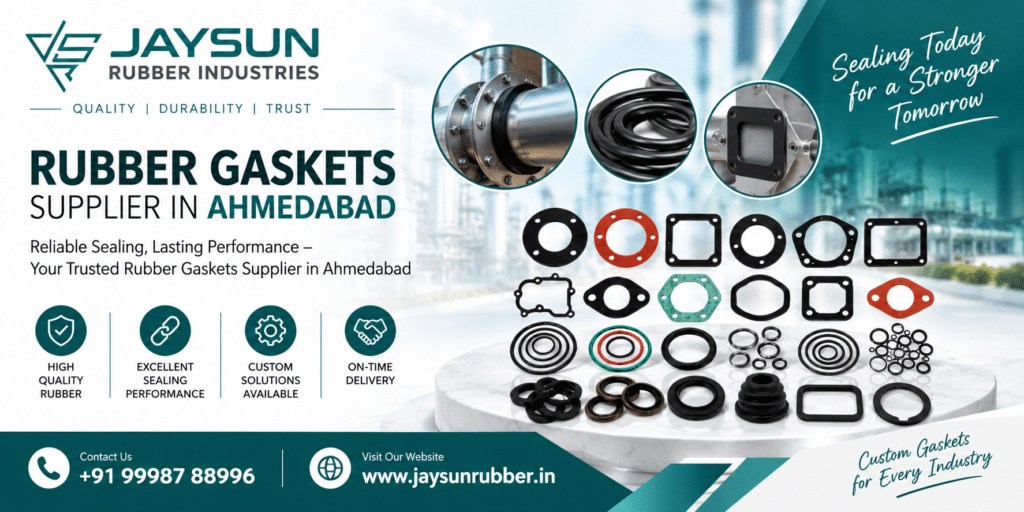
Rubber Gaskets Supplier in Ahmedabad
Inroduction
Founded in 2012, Jaysun Rubber Industries is a trusted manufacturer and supplier of premium-quality industrial rubber components designed to meet the demanding requirements of various industries. With over a decade of manufacturing expertise, advanced production technology, precision moulding capabilities, and stringent quality control processes, we produce durable, high-performance rubber products that deliver excellent sealing, vibration control, and long-lasting reliability across diverse industrial applications.
Rubber gaskets are important components used in many industrial applications to prevent leakage, reduce vibration, and create a secure seal between two surfaces. They help keep liquids, gases, air, oil, and other materials from escaping through joints and connections. From manufacturing plants to automotive industries, rubber gaskets play an essential role in maintaining the safety and efficiency of equipment.
If you are searching for a reliable Rubber Gaskets Supplier in Ahmedabad, choosing the right supplier is important for getting products that meet your application requirements. Good-quality rubber gaskets can improve equipment performance, reduce maintenance costs, and support smooth industrial operations.
Jaysun Rubber Industries is a company to consider for industrial rubber product requirements. By focusing on suitable materials, dependable product quality, and customer requirements, Jaysun Rubber Industries can help businesses find rubber sealing solutions for different industrial applications. We are the best Rubber Gaskets Manufacturer.
What Are Rubber Gaskets
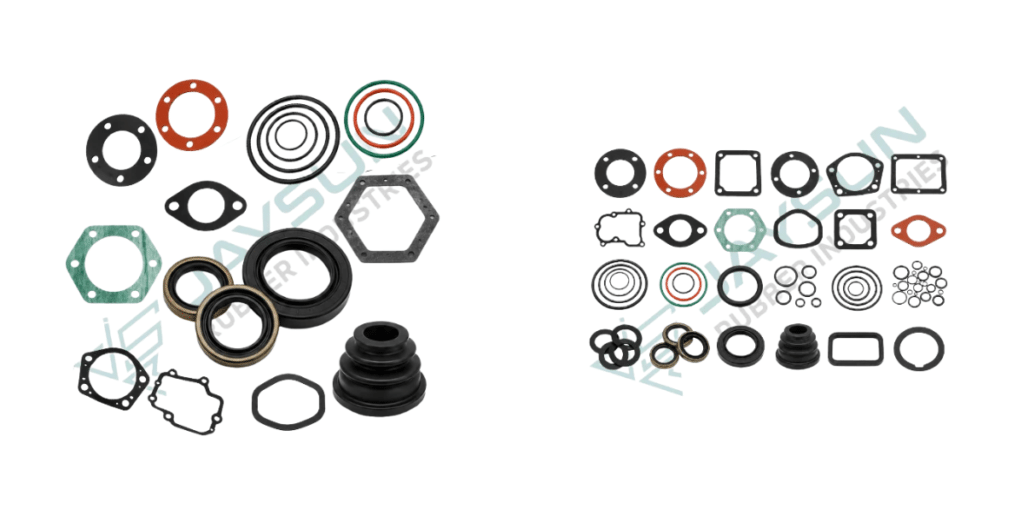
Rubber gaskets are sealing components made from different types of rubber. They are placed between two connected surfaces to prevent unwanted leakage and protect equipment from dust, moisture, pressure, and other external factors. We are the best Rubber Gaskets Exporter.
These gaskets are available in different shapes, sizes, thicknesses, and material grades. The right design depends on the operating temperature, pressure, chemical exposure, and working conditions of the application. For example, a gasket used in a water pipeline may require different properties from one used in an automotive engine or industrial chemical system.
Types of Rubber Gaskets
Different industrial applications require different rubber materials. Understanding the available options can help buyers make better decisions.
1. Nitrile Rubber Gaskets
Nitrile rubber, also known as NBR, is commonly used in applications involving oils, fuels, and lubricants. It offers useful oil resistance and mechanical properties, making it suitable for many industrial and automotive sealing applications.
- Oil and fuel systems
- Automotive components
- Industrial machinery
- Hydraulic equipment, where the material is compatible
2. Silicone Rubber Gaskets
Silicone rubber gaskets are known for their flexibility and ability to perform across a wide temperature range, depending on the grade. They are often used in applications where temperature stability and sealing performance are important.
- Electrical equipment
- Food-processing equipment, using suitable grades
- Industrial appliances
- Temperature-sensitive applications
3. EPDM Rubber Gaskets
EPDM rubber is widely used in applications requiring resistance to weather, ozone, water, and outdoor environmental conditions. However, it is generally not suitable for petroleum-based oils and fuels.
- Water pipelines
- HVAC systems
- Outdoor equipment
- Water-handling installations
4. Neoprene Rubber Gaskets
Neoprene rubber offers a useful combination of flexibility, weather resistance, and resistance to certain oils and chemicals. Its suitability depends on the specific compound and working environment.
- Industrial enclosures
- General machinery
- HVAC equipment
- Outdoor sealing systems
5. Natural Rubber Gaskets
Natural rubber provides good elasticity, flexibility, and resistance to wear in suitable operating conditions. It is often selected for applications where cushioning and mechanical performance are important.
- Industrial machinery
- Vibration-control systems
- General-purpose sealing
- Equipment requiring flexible rubber components
Applications of Rubber Gaskets
1. Automotive Industry
The automotive industry uses rubber gaskets in engines, fuel systems, cooling systems, transmission assemblies, and other mechanical components. These gaskets help prevent oil, coolant, air, and other fluids from leaking while supporting the proper functioning of vehicles.
Rubber gaskets are also used in vehicle doors, windows, lighting assemblies, and body panels to reduce the entry of dust and moisture. Automotive manufacturers and component suppliers need gaskets that can withstand vibration, temperature changes, and continuous mechanical stress.
2. Industrial Machinery and Equipment
Industrial machinery often operates under demanding conditions, making effective sealing essential for smooth performance. Rubber gaskets are installed between machine housings, covers, flanges, and connecting surfaces to prevent leakage and protect internal components.
These gaskets are commonly used in manufacturing machines, compressors, pumps, hydraulic systems, pneumatic equipment, and processing machinery. They help maintain pressure, minimise fluid loss, and protect sensitive components from external contaminants.
3. Chemical and Process Industries
Chemical processing plants require sealing components that can withstand exposure to specific chemicals, liquids, and industrial gases. Rubber gaskets are used in chemical tanks, pipelines, valves, pumps, storage containers, and processing equipment.
The correct rubber compound is important because not every rubber material is suitable for every chemical. For example, EPDM may be suitable for many water-based applications, while nitrile rubber is often selected for oil-related applications. Other materials, such as FKM, may be considered for certain chemical and higher-temperature environments.
Industrial buyers should evaluate chemical compatibility, temperature limits, pressure conditions, and operating requirements before selecting a gasket. Working with an experienced supplier helps businesses identify appropriate options for their applications.
4. Plumbing and Water Supply Systems
Rubber gaskets are widely used in plumbing installations and water distribution systems. They provide sealing between pipes, fittings, taps, valves, flanges, and water storage equipment.
Their primary purpose is to prevent water leakage and maintain secure connections. Properly selected gaskets also help reduce maintenance requirements and protect surrounding equipment from water damage.
Rubber gaskets are used in residential buildings, commercial complexes, industrial water supply systems, and water treatment plants. Material selection should consider water quality, temperature, pressure, and any applicable potable-water requirements.
5. Electrical and Electronics Industry
Electrical equipment often requires effective sealing to protect internal components from dust, moisture, and environmental exposure. Rubber gaskets are used in electrical enclosures, control panels, junction boxes, switchgear cabinets, and industrial electrical assemblies.
These gaskets help create a seal between enclosure panels and covers. When correctly designed and installed, they can support the enclosure’s specified level of protection against environmental contaminants.
Manufacturers may require custom-shaped rubber gaskets to match specific panel designs and equipment dimensions. A suitable gasket can improve enclosure reliability and help protect electrical components during regular operation.
6. Pharmaceutical and Food Processing Industries
Food processing and pharmaceutical facilities require sealing components that meet strict hygiene and application requirements. Rubber gaskets may be used in processing equipment, storage vessels, pipelines, pumps, valves, and fluid transfer systems.
In these applications, the gasket material must be compatible with the processed product, cleaning chemicals, sterilisation procedures, and operating temperatures. Suitable food-contact or pharmaceutical-grade materials may be necessary, depending on the application and regulatory requirements.
7. HVAC and Refrigeration Systems
Heating, ventilation, air conditioning, and refrigeration systems use rubber gaskets to provide effective sealing between ducts, access panels, pipes, compressors, and equipment housings.
These gaskets help reduce unwanted air leakage, prevent the escape of compatible fluids, and minimise the entry of dust and moisture. In refrigeration systems, material compatibility with the refrigerant, lubricant, pressure, and operating temperature is particularly important.
Rubber gaskets also help reduce vibration transmission between certain connected components. Selecting the correct material and dimensions supports reliable system performance and can reduce the need for frequent replacement.
8. Oil and Gas Industry
The oil and gas industry requires dependable sealing solutions for equipment that handles oils, fuels, lubricants, and other process fluids. Rubber gaskets are used in selected pipelines, pumps, valves, storage equipment, compressors, and mechanical assemblies.
These applications may involve high pressure, elevated temperatures, chemical exposure, and continuous operation. Therefore, the gasket material must be selected according to the specific service conditions.
Nitrile rubber is commonly considered for many oil and fuel applications, while FKM may be suitable for certain demanding temperature and chemical conditions. However, the exact fluid composition and operating parameters must always be checked before final selection.
9. Construction and Infrastructure
Rubber gaskets are used in construction projects and infrastructure systems where effective sealing is needed between connected components. They can be found in plumbing networks, water tanks, industrial buildings, access panels, equipment enclosures, and selected structural or mechanical assemblies.
Their flexibility allows them to accommodate minor surface irregularities and, in suitable designs, some movement or vibration. They can also help prevent water and dust from entering protected areas.
Construction companies, equipment manufacturers, and maintenance contractors often require rubber gaskets in standard or custom dimensions to match their installation requirements.
10. Pumps, Valves, and Pipeline Systems
Pumps, valves, and pipelines depend on reliable sealing to prevent leakage and maintain operating efficiency. Rubber gaskets are installed between flanged connections, valve bodies, pump housings, and other mating surfaces.
The gasket helps fill small gaps between connected surfaces and creates a seal when the joint is assembled with the appropriate compression. Proper gasket selection is especially important in systems that handle water, oil, air, chemicals, or industrial process fluids.
Benefits of Rubber Gaskets
1. High-Quality Sealing Performance
One of the major benefits of rubber gaskets is their ability to provide effective sealing between connected surfaces. They help prevent the leakage of liquids, gases, oils, and other fluids when the correct gasket material and design are selected. A dependable supplier can help you choose suitable rubber gaskets according to your application, operating pressure, and temperature requirements.
2. Effective Leakage Prevention
One of the biggest benefits of rubber gaskets is their ability to prevent leakage. They create a tight seal between connected surfaces and help prevent liquids, gases, oils, and other substances from escaping.
A reliable Rubber Gaskets Supplier in Ahmedabad can help businesses select suitable gasket materials and sizes according to their sealing requirements. Properly selected gaskets are useful in pipelines, pumps, compressors, valves, tanks, and industrial machinery.
3. Excellent Flexibility and Elasticity
Rubber is known for its flexibility and elasticity. These properties allow rubber gaskets to compress when installed and fill small gaps between mating surfaces.
This flexibility helps maintain an effective seal even when equipment experiences minor movements or vibrations. Rubber gaskets are available in different materials, allowing businesses to choose products suitable for their operating conditions.
4. Resistance to Vibration and Shock
Industrial machinery often produces vibration and mechanical movement during operation. These vibrations can affect joints, connections, and sealing surfaces.
Rubber gaskets help absorb vibrations and reduce the impact of minor shocks. This makes them useful in automotive assemblies, industrial equipment, pumps, compressors, and mechanical systems. By selecting the right gasket, businesses can support reliable equipment operation and reduce unnecessary wear.
5. Durability and Long Service Life
Durability is another important advantage of rubber gaskets. When the correct material is selected and the gasket is installed properly, it can withstand repeated compression and regular operating conditions for an extended period.
A dependable Rubber Gaskets Supplier in Ahmedabad can assist businesses in selecting suitable products for their equipment. Durable gaskets help reduce frequent replacements, maintenance expenses, and interruptions to production.
6. Cost-Effective Sealing Solutions
Rubber gaskets can provide an economical sealing solution for businesses across different industries. Their relatively simple installation and ability to reduce leakage-related maintenance can help control operating costs.
Working with an experienced supplier also helps buyers identify suitable gasket dimensions and materials, avoiding unnecessary replacement costs caused by incorrect product selection
7. Easy Installation and Maintenance
Rubber gaskets are generally easy to install between compatible mating surfaces. Their flexibility allows them to conform to minor surface irregularities when the correct compression and installation method are used.
Easy installation can save time during assembly, servicing, and repair work. Regular inspection and timely replacement of worn or damaged gaskets can further help maintain reliable equipment performance.
8. Custom Sizes and Specifications
Industrial equipment often requires gaskets with specific dimensions, thicknesses, shapes, and material properties. Standard products may not always meet these requirements.
Depending on the supplier’s capabilities, businesses can source custom-cut or moulded rubber gaskets designed for specific applications. Before ordering, it is helpful to provide technical drawings, dimensions, material preferences, and operating conditions.
9. Improved Equipment Protection
Rubber gaskets do more than prevent leakage. Depending on the design and installation, they can also help protect equipment from dust, moisture, vibration, and environmental exposure.
A properly fitted gasket may help protect sensitive components, reduce unwanted ingress, and support the reliable operation of industrial machinery.
How to Choose the Right Rubber Gaskets Supplier in Ahmedabad
Finding the right supplier is an important step for businesses that depend on reliable sealing products. Before placing an order, consider the following factors.
1. Check Material Suitability
Ask about the rubber material and its compatibility with the fluids, chemicals, temperatures, and environmental conditions involved in your application.
2. Confirm Dimensions and Specifications
Check the required inner diameter, outer diameter, thickness, shape, and tolerances. Accurate dimensions help ensure proper fitting and sealing performance.
3. Ask About Customisation
If your equipment requires a special gasket profile or non-standard size, discuss whether the supplier can evaluate custom manufacturing requirements.
4. Evaluate Quality Consistency
For repeat industrial orders, consistent dimensions and material properties are important. Ask about available quality checks and relevant technical documentation.
5. Consider Delivery and Supply Requirements
A dependable supplier should communicate lead times, order quantities, and delivery arrangements clearly. This is particularly important for maintenance schedules and ongoing production.
6. Compare Value, Not Just Price
A low-cost gasket may not be economical if it fails prematurely. Consider service life, material suitability, replacement frequency, and overall operating costs when comparing options.
Why Choose Jaysun Rubber Industries
1. High-Quality Rubber Gasket Materials
A reliable supplier provides rubber gaskets manufactured from suitable materials such as EPDM, Nitrile (NBR), Silicone, Neoprene, and Natural Rubber. Each material offers different properties, including flexibility, resistance to oil, weather protection, and temperature tolerance. Choosing the right rubber material helps ensure dependable sealing performance for your application.
2. Customised Rubber Gasket Solutions
Different industrial applications require different gasket shapes, sizes, thicknesses, and designs. An experienced supplier can help source or manufacture customised rubber gaskets according to specific drawings, dimensions, and technical requirements. Custom solutions help achieve a proper fit and reduce the risk of leakage.
3. Excellent Sealing Performance
Rubber gaskets create a secure seal between two connecting surfaces. They help prevent leakage, protect internal components from dust and moisture, and support the safe operation of machinery. Quality gaskets are especially valuable in applications involving pipelines, pumps, valves, engines, and industrial equipment.
4. Durable and Long-Lasting Products
Industrial rubber gaskets are often exposed to pressure, vibration, chemicals, heat, and continuous operation. Selecting the correct material and gasket design helps improve durability and reduce premature wear. A dependable supplier can guide buyers toward suitable products based on their operating conditions.
5. Cost-Effective Industrial Solutions
Working with a trusted Rubber Gaskets Supplier in Ahmedabad can help businesses control maintenance and replacement expenses. Properly selected gaskets can reduce leakage-related downtime, minimise product wastage, and support longer service intervals. Competitive pricing and consistent product quality also help businesses manage their procurement budgets.
6. Reliable Sealing Performance
Leakage can lead to product wastage, machine damage, maintenance expenses, and production interruptions. Rubber gaskets help create a tight seal between mating surfaces and prevent unwanted leakage when correctly selected and installed. A suitable gasket should match the equipment’s pressure, temperature, surface finish, and operating medium. Working with an experienced supplier makes it easier to identify the right gasket for specific industrial needs.
7. Technical Support and Product Selection
A professional supplier helps buyers select gaskets according to material compatibility, operating temperature, pressure, dimensions, and environmental conditions. This guidance is important because the wrong gasket material may harden, swell, crack, or lose its sealing performance.
8. Reliable Supply and Timely Delivery
Timely availability of industrial components is essential for maintaining production schedules. A dependable local supplier can make communication, order coordination, sample approval, and repeat purchasing more convenient for businesses operating in Ahmedabad and nearby industrial areas.
9. Convenient Sourcing from Ahmedabad
Ahmedabad is an important industrial and commercial centre in Gujarat, serving businesses across manufacturing, engineering, machinery, and related sectors. Sourcing rubber gaskets from a supplier serving Ahmedabad can make communication, product enquiries, and order coordination more convenient for regional buyers. Industrial purchasers should confirm the supplier’s location, delivery coverage, available product range, minimum order quantity, and lead time before placing an order.
10. Customer Support and Technical Guidance
Choosing the right gasket involves more than selecting a product from a catalogue. Buyers may need assistance understanding rubber materials, checking dimensions, identifying suitable hardness, or determining whether a gasket can withstand the operating environment. Clear communication with the supplier helps reduce errors during purchasing and installation.
Common Mistakes to Avoid When Buying Rubber Gaskets
Even a good-quality gasket can fail if it is not suitable for the application. Avoid these common mistakes:
- Selecting a gasket based only on its price.
- Ignoring operating temperature and pressure.
- Using rubber that is incompatible with oils, fuels, or chemicals.
- Ordering incorrect dimensions or thickness.
- Over-tightening fasteners during installation.
- Reusing a damaged or permanently deformed gasket.
- Failing to inspect the sealing surfaces before installation.
Discussing these factors with your supplier before purchasing can help reduce unnecessary replacements and improve sealing reliability.
Frequently Asked Questions (FAQs)
1. What are rubber gaskets used for
Rubber gaskets are used to seal joints between two surfaces and help prevent the leakage of liquids, gases, and air. They are commonly used in pumps, pipelines, machinery, automotive systems, and industrial equipment.
2. Which rubber material is best for industrial gaskets
There is no single best material for every application. NBR is commonly considered for oil-related applications, EPDM for weather and water exposure, silicone for selected temperature-sensitive applications, and neoprene for general industrial uses. Final selection depends on operating conditions.
3. Can I order customised rubber gaskets
Custom gaskets may be available depending on the supplier’s capabilities. Share your drawing, sample, dimensions, required material, and operating conditions with Jaysun Rubber Industries to discuss your requirements.
4. How do I select the correct gasket thickness
Gasket thickness depends on the equipment design, gap between mating surfaces, compression requirements, and manufacturer’s specifications. Always confirm the required thickness before ordering.
5. How long do rubber gaskets last
Service life depends on the material, temperature, pressure, chemical exposure, installation, and frequency of use. Regular inspection and timely replacement can help prevent unexpected leakage.
6. Why is material compatibility important
An incompatible rubber compound may swell, harden, crack, or lose its sealing ability when exposed to particular fluids, chemicals, or temperatures. Compatibility should be checked before selecting a gasket.
7. Why consider Jaysun Rubber Industries for rubber gaskets
Jaysun Rubber Industries can be contacted to discuss industrial rubber gasket requirements, material selection, dimensions, and potential custom solutions. Buyers should confirm product specifications and availability directly with the company.
8. How can I request a quotation for rubber gaskets
Prepare the required quantity, dimensions, material preference, application details, and any available technical drawings. Contact Jaysun Rubber Industries with these details to discuss product suitability and quotation requirements.
Conclusion
Rubber gaskets are essential for preventing leakage, protecting equipment, and supporting reliable industrial operations. Selecting the right material, dimensions, and design helps improve sealing performance and reduce maintenance-related problems. We are the best Rubber Gaskets Exporter in Gujarat.
If you are searching for a Rubber Gaskets Supplier in Ahmedabad, consider discussing your industrial requirements with Jaysun Rubber Industries. Whether you need gaskets for machinery, engineering equipment, automotive applications, or a customised sealing requirement, selecting a suitable material and design is the first step towards dependable performance.